
The Ute Tribe is a Native American people whose homelands stretch across parts of what are now Utah, Colorado, Wyoming, New Mexico, and Arizona. The name “Utah” comes from the Ute people, making their history especially important for students learning about the American West. The Ute Tribe is not only part of the past; Ute communities continue to live, govern, teach, celebrate, and protect their culture today. Learning about the Ute people helps students understand Indigenous history, land, language, resilience, and the continuing importance of tribal sovereignty.
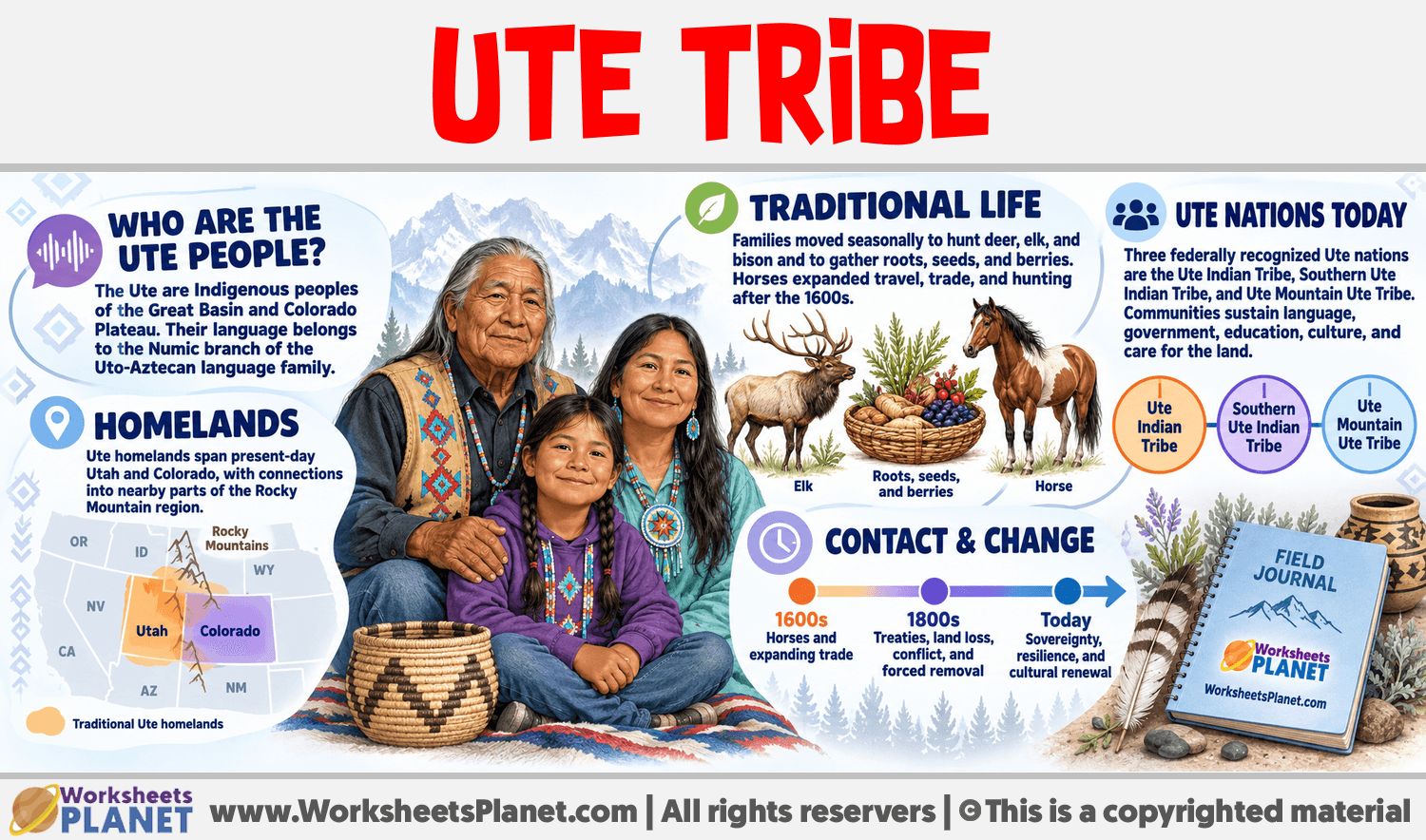
Who are the Ute people?
The Ute people are an Indigenous people of the Great Basin and Rocky Mountain regions. Before European and American settlement, Ute bands lived across a large area that included mountains, valleys, plateaus, and deserts. They knew the land deeply and moved with the seasons to hunt, gather, trade, and visit other communities.
The word “Ute” is often connected to meanings such as “people of the mountains” or “land of the sun,” though exact interpretations can vary. Today, there are three federally recognized Ute tribal governments: the Ute Indian Tribe of the Uintah and Ouray Reservation in Utah, the Southern Ute Indian Tribe in Colorado, and the Ute Mountain Ute Tribe, whose lands include areas in Colorado, Utah, and New Mexico.
- The Ute people are Indigenous to the western United States, especially the Rocky Mountains and surrounding regions.
- Ute communities are made up of distinct bands and tribes, each with its own history and government.
- The Ute Tribe remains a living culture, not just a subject from history books.
Where did the Ute Tribe live?
The traditional homeland of the Ute Tribe covered a wide and varied landscape. Ute people lived in places with forests, rivers, hot springs, grasslands, deserts, and high mountain passes. This environment shaped how they traveled, what they ate, what materials they used, and how they organized their communities.
Because the land changed from season to season, Ute families often moved to different areas throughout the year. In warmer months, they might gather berries, roots, seeds, and medicinal plants. In colder months, they used stored food and relied on hunting animals such as deer, elk, antelope, and rabbits. The arrival of the horse in the 1600s and 1700s changed life for many Ute bands, making travel, hunting, and trade easier over long distances.
Today, Ute reservations are much smaller than the original Ute homelands. This change happened because of treaties, conflict, forced removals, and U.S. government policies. Understanding this loss of land is an important part of learning about the Ute Tribe and the broader history of Native nations in North America.
- Traditional Ute homelands included parts of present-day Utah, Colorado, Wyoming, New Mexico, and Arizona.
- Mountains and valleys provided food, shelter materials, travel routes, and spiritual connections.
- Modern Ute reservations represent only a portion of the lands Ute people historically used and cared for.
What was traditional Ute life like?
Traditional Ute life was closely connected to the seasons and the natural world. Ute families were skilled hunters, gatherers, travelers, and traders. They used knowledge passed down through generations to find food, make tools, prepare clothing, and understand weather and animal patterns.
Homes were often practical and movable because many Ute groups traveled throughout the year. Some families used brush shelters or tipis, depending on the location, season, and materials available. Clothing was commonly made from animal hides and decorated with shells, beads, quills, or paint. Tools, baskets, and other items were made with care and purpose.
Ute social life included strong family ties, storytelling, ceremonies, music, dance, and teaching children through observation and practice. Elders played an important role in sharing oral history, cultural values, and lessons about respectful behavior. Children learned by helping with daily tasks and listening to stories that carried knowledge about the world.
- Food sources included deer, elk, antelope, rabbits, fish, berries, seeds, roots, and nuts.
- Important skills included tracking animals, making clothing, gathering plants, building shelters, and preparing food.
- Stories and ceremonies helped teach values, history, identity, and respect for the land.
How did contact with Europeans and the United States affect the Ute Tribe?
Contact with Spanish explorers, traders, settlers, and later the United States government brought major changes to Ute life. The horse became an important part of Ute culture after its introduction, strengthening travel, trade, and hunting. Ute people traded with neighboring tribes and with Spanish settlements, exchanging items such as hides, horses, tools, and food.
However, contact also brought serious harm. New diseases, competition over land, broken agreements, and pressure from miners and settlers disrupted Ute communities. As more non-Native settlers moved west, Ute people were pushed from many of their traditional lands. The discovery of gold and other resources increased conflict because outsiders wanted access to Ute territory.
Treaties and agreements often reduced Ute lands or were not honored by the U.S. government. Some Ute groups were forced onto reservations, while others faced restrictions on travel, hunting, and traditional ways of life. These events are part of a larger history of colonization, in which Native nations fought to protect their lands, rights, and cultures.
- European contact introduced horses and new trade opportunities, but also disease and conflict.
- Settler expansion reduced Ute access to traditional hunting and gathering areas.
- Treaties, removals, and reservation policies deeply changed Ute communities and land ownership.
What is important about the Ute Tribe today?
The Ute Tribe today is active, modern, and self-governing. Ute tribal governments manage community services, education programs, cultural preservation, natural resources, health care, and economic development. Like other federally recognized tribes, Ute nations have tribal sovereignty, which means they have the right to govern themselves and make decisions for their people.
Language and cultural preservation are especially important. The Ute language belongs to the Numic branch of the Uto-Aztecan language family. Many Native languages in the United States were harmed by boarding schools and policies that discouraged or punished Indigenous languages. Today, Ute communities work to teach the language to younger generations and keep cultural knowledge strong.
Ute people also continue ceremonies, dances, arts, and community gatherings. Events such as bear dances and powwows can be important times for cultural expression, family connection, and teaching. While traditions continue, Ute people also live contemporary lives as students, teachers, leaders, artists, business owners, athletes, and professionals.
For students, one of the most important lessons is that the Ute Tribe should not be studied only as something from long ago. Ute history includes hardship and resilience, but it also includes survival, leadership, adaptation, and pride. Learning about the Ute people means recognizing both their deep historical roots and their continuing role in the present.
- The Ute Tribe continues to exercise self-government through modern tribal nations.
- Cultural programs help preserve Ute language, stories, ceremonies, and traditions.
- Ute people contribute to education, government, the arts, environmental work, business, and many other fields today.

Leave A Comment