
The life cycle of a snail is a fascinating example of how a small animal grows, changes, and survives in its environment. Snails are mollusks, which means they have soft bodies, and many of them carry a hard shell for protection. Although snails move slowly, their life cycle includes important stages such as egg laying, hatching, growth, reproduction, and adulthood. Learning about this cycle helps students understand animal development, habitats, adaptation, and the needs of living things.
What is the life cycle of a snail?
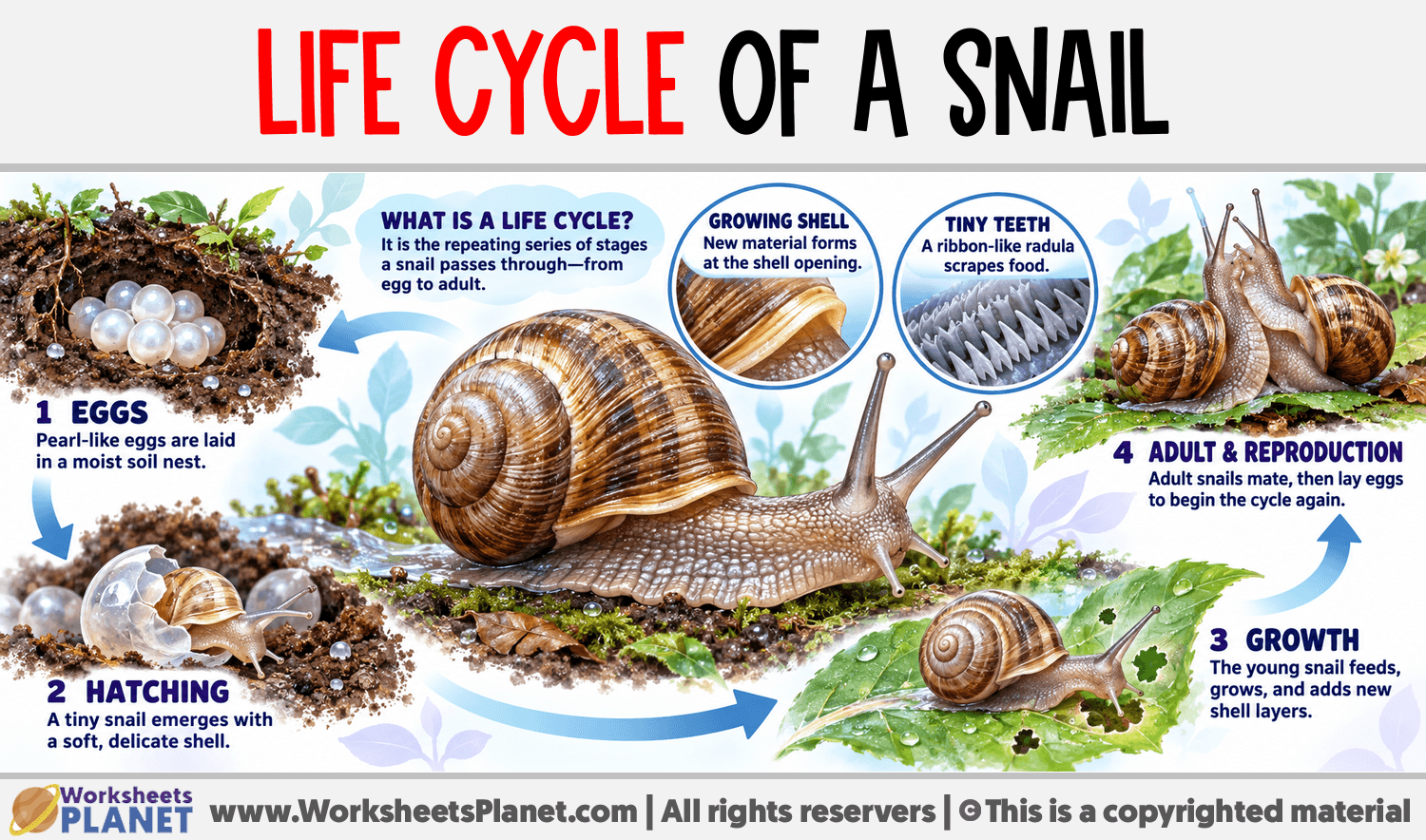
The life cycle of a snail describes the stages a snail goes through from the time it begins as an egg until it becomes an adult that can reproduce. Like many animals, snails are born small and must grow before they can have young of their own.
Most land snails follow a similar pattern: they hatch from eggs, develop a shell, grow larger, reach maturity, and then lay eggs. The exact timing can change depending on the snail species, weather, food supply, and habitat. Some snails may live only a year or two, while others can live for several years in safe conditions.
Snails need moisture to survive because their soft bodies can dry out easily. This is why they are often seen after rain, in gardens, under leaves, or in shady places. Their life cycle is closely connected to damp environments where eggs and young snails have a better chance of survival.
Stage 1: Snail eggs and where they are laid
The first stage in the life cycle of a snail begins when an adult snail lays eggs. Many land snails dig a small hole in damp soil and place their eggs inside. The eggs are usually small, round, and soft. They may look white, clear, or slightly yellow, depending on the species.
A snail may lay dozens of eggs at one time. The soil helps protect the eggs from drying out and hides them from some predators. Warm, moist conditions are important because the baby snails develop inside the eggs before hatching.
Not all eggs survive. Some may be eaten by insects, birds, or other small animals. Others may dry out if the ground becomes too hot or dry. This is one reason snails lay many eggs: it increases the chance that at least some young snails will hatch.
- Snail eggs are usually laid in damp soil, compost, leaf litter, or sheltered garden areas.
- The eggs need moist conditions so the developing snails do not dry out.
- Hatching may take a few weeks, but the timing depends on temperature and species.
Stage 2: Hatching and the baby snail
When the baby snail is ready, it breaks out of the egg. A newly hatched snail is very small and delicate, but it already has a tiny shell. This shell is soft at first, so the young snail must avoid danger while it grows stronger.
One interesting fact is that some baby snails eat the remains of their own eggshell after hatching. This gives them calcium, an important mineral they need to build and harden their shell. Calcium is essential throughout a snail’s life because the shell grows with the snail.
Baby snails look like miniature adults, but they are not ready to reproduce. They spend much of their early life searching for food, staying moist, and hiding from predators. Their small size makes them vulnerable, so they often remain close to the ground, under leaves, or in cracks in the soil.
Stage 3: Growth, feeding, and shell development
As a snail grows, its body becomes larger and its shell expands in a spiral shape. The shell is part of the snail’s body, so it does not move to a new shell like a hermit crab. Instead, the snail adds new material to the edge of the shell as it develops.
Food is very important during this stage. Many land snails eat leaves, soft plant material, fruits, vegetables, fungi, and decaying matter. They use a special tongue-like organ called a radula, which has tiny tooth-like structures that scrape food into small pieces.
A healthy shell helps protect the snail from predators, injury, and dry conditions. If the shell becomes cracked, a snail may repair minor damage if it has enough calcium and moisture. However, serious shell damage can be dangerous.
During growth, snails also produce slime, or mucus. This slippery substance helps them move across rough surfaces, reduces injury, and keeps their bodies moist. The trail left behind by a snail is dried mucus.
- Plants and leaves provide energy for growth.
- Calcium helps build a strong shell.
- Moist habitats prevent the snail’s body from drying out.
- Hiding places protect young snails from birds, beetles, frogs, and other predators.
Stage 4: Adult snails and reproduction
When a snail becomes an adult, it can reproduce and continue the life cycle. Many land snails are hermaphrodites, which means one snail has both male and female reproductive organs. Even so, most still mate with another snail to exchange reproductive cells.
After mating, a snail can lay fertilized eggs in a safe, moist place. This begins the cycle again. Adult snails often choose locations where the eggs will be protected from sun, dryness, and hungry animals.
The time it takes for a snail to become an adult depends on the species and environment. Some may mature in less than a year, while others take longer. Food, temperature, moisture, and safety all affect how quickly a snail grows and reproduces.
Snails are most active when conditions are damp. In dry or cold weather, some snails become inactive to survive. They may seal the opening of their shell with a layer of dried mucus to keep moisture inside. This resting behavior helps them live through difficult conditions.
Why the snail life cycle matters in nature
The life cycle of a snail is not only important for snails; it also plays a role in the ecosystem. Snails help break down dead leaves and plant material, returning nutrients to the soil. This makes them part of the natural recycling process in gardens, forests, and wetlands.
Snails are also food for many animals, including birds, frogs, lizards, beetles, and small mammals. Because they are both consumers and prey, they help connect different parts of a food chain. A healthy snail population can show that an area has enough moisture, shelter, and plant life.
In gardens, snails can sometimes be seen as pests because they may eat young plants and vegetables. However, they are still living organisms with an important place in nature. Studying the life cycle of a snail helps students see how even small, slow-moving animals have special adaptations and a clear pattern of growth.
A simple classroom observation can make this topic easier to understand. Students can look for snail habitats after rain, examine empty shells, or draw the stages from egg to adult. These activities encourage careful observation while teaching respect for living things.
- The main stages are egg, hatchling, growing young snail, and adult.
- Snails need moisture, food, shelter, and calcium to complete their life cycle.
- Their shells, slime, and slow movement are adaptations that help them survive.

Leave A Comment