
Finding activities that build early reading skills and keep little learners engaged can sometimes feel like a challenge. That’s why I love using Read and Draw worksheets in my classroom. They’re simple, low-prep, and pack a lot of learning into one page.
These have become a staple during my literacy block, whether it’s for independent work, small groups, or just a quick comprehension check that doesn’t require a full-on lesson.
Do you want this resource?
You can get it, along with many other materials, in my Teachers Pay Teachers store.
What is the resource?
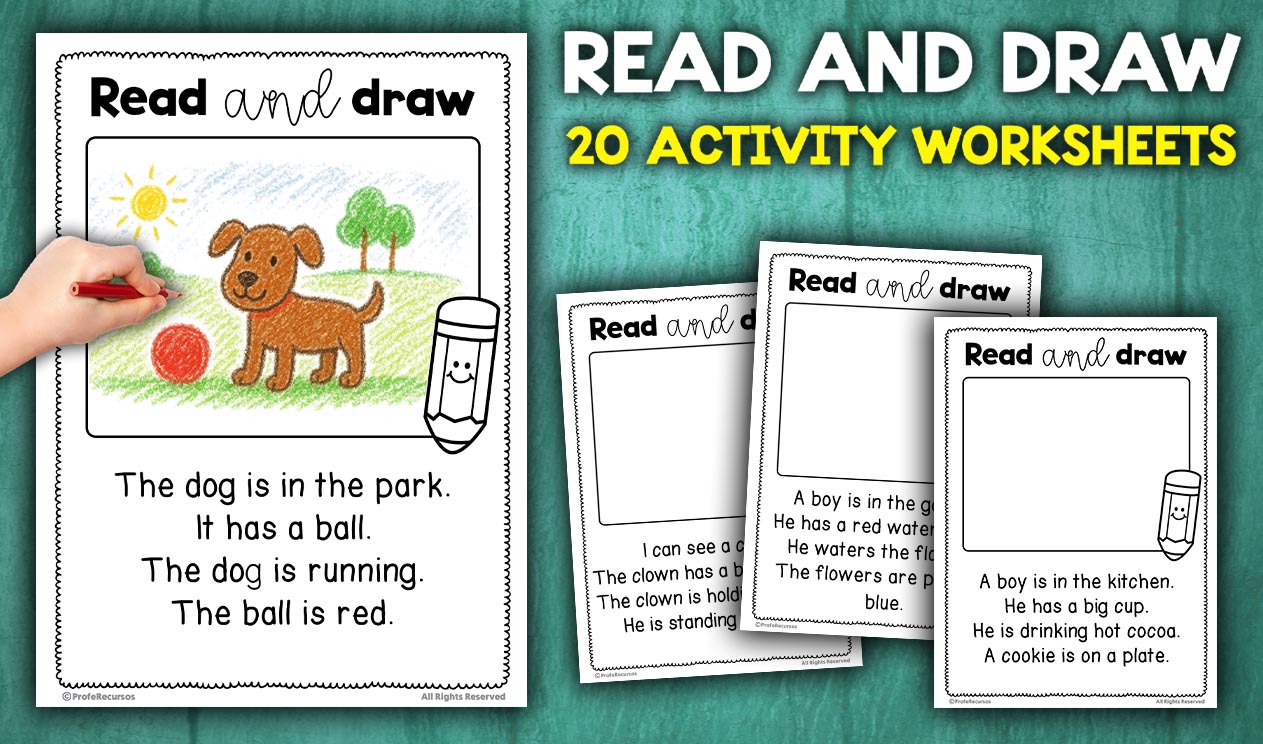
This set includes 20 printable comprehension worksheets designed specifically for Kindergarten and 1st Grade students. Each page features:
- A short and simple four-sentence passage
- Clear language with helpful color and action clues
- A large drawing box for students to illustrate what they understood
- Fun, kid-friendly topics like animals, weather, nature, and daily routines
After reading the passage, students draw a picture to match what they read. It’s an age-appropriate way to check comprehension through creativity—no writing required.
Why this works so well
The combination of reading and drawing really helps ideas stick. One of my students who usually struggles with retelling found this activity much easier because it gave him a different way to show understanding. And let’s be honest—kids love any excuse to draw!
It also gives me a quick visual snapshot of how well they understood the text. If a student misses key details in their picture, we can revisit the reading together.
What skills are we building?
Reading fluency – Short passages give students a chance to build confidence
Comprehension – They’re not just reading—they’re processing what they read
Visualization – Helps students create mental images, a key part of reading success
Fine motor practice – Drawing supports those foundational skills too
Easy ways to use this in the classroom
Morning work: A calm, independent activity to start the day
Literacy centers: Rotate it into your small group stations
Fast finishers: Keep a few extra copies ready for early finishers
Listening comprehension: Read the passage aloud and let students draw what they heard
