
Rattlesnakes are some of the most famous snakes in North and South America. They are known for the buzzing sound made by the rattle at the end of their tail. For kids learning about reptiles, rattlesnakes are a fascinating example of how animals protect themselves, hunt for food, and survive in dry, rocky, grassy, or forested habitats. Although rattlesnakes can be dangerous because they are venomous, they are not “mean” animals. They usually want to avoid people and use their rattle as a warning that means, “Please stay away.”
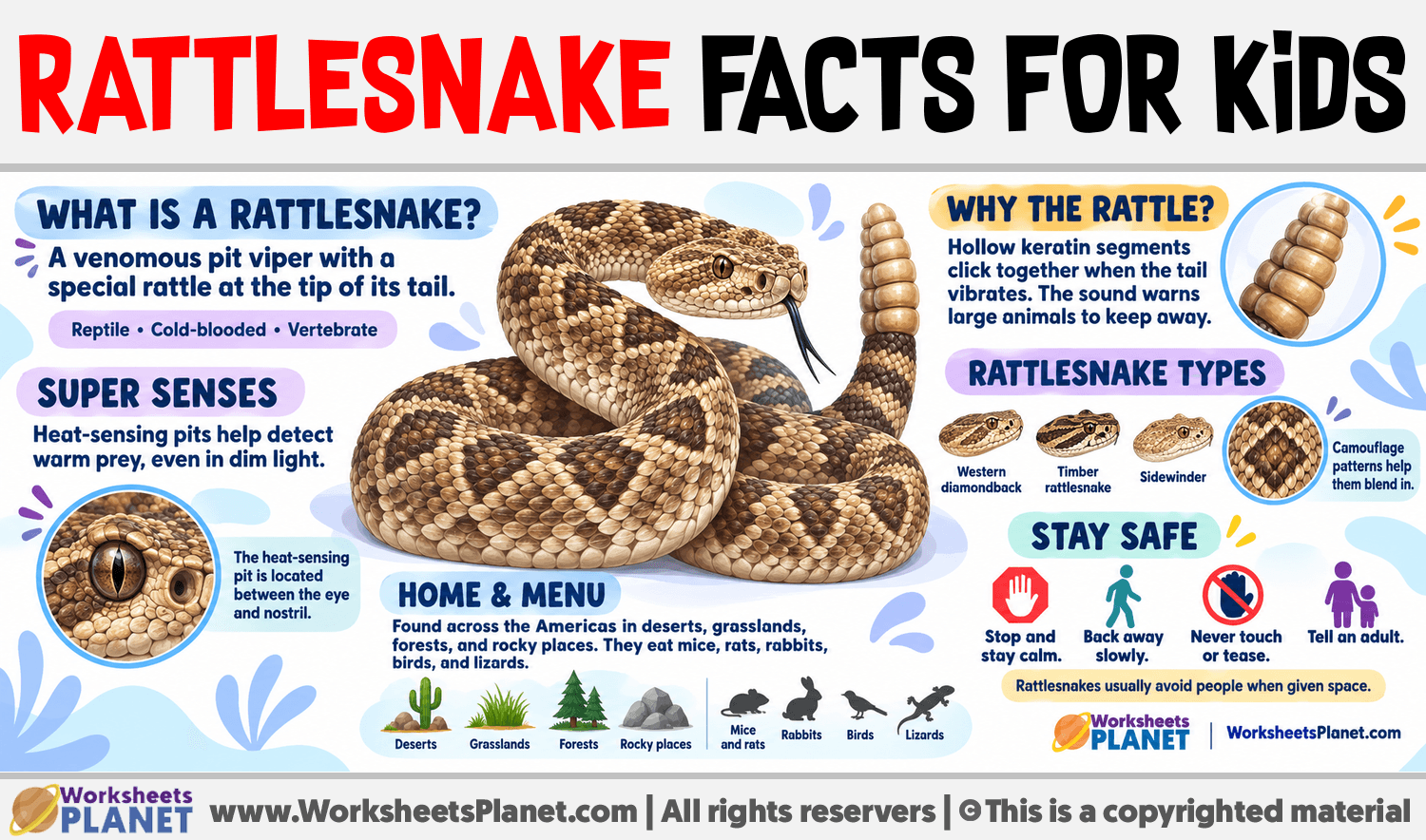
What is a rattlesnake?
A rattlesnake is a type of venomous snake that belongs to the pit viper family. Pit vipers have special heat-sensing pits on their faces, located between the eyes and nostrils. These pits help them detect warm-blooded animals, such as mice and rabbits, even in the dark.
Rattlesnakes are reptiles, which means they are cold-blooded. Their body temperature changes with the environment. When it is cool, they may rest in the sun to warm up. When it is very hot, they often hide under rocks, in burrows, or in shaded places.
Most rattlesnakes have thick bodies, triangular-shaped heads, and patterned scales that help them blend in with their surroundings. This camouflage makes it easier for them to hide from predators and surprise their prey.
- Rattlesnakes do not have eyelids; their eyes are covered by clear scales.
- They smell with their tongues by collecting scent particles from the air.
- They shed their skin as they grow, usually several times a year.
- They are found only in the Americas, from Canada to Argentina.
Why do rattlesnakes have rattles?
The rattle is the most recognizable part of a rattlesnake. It is made of dry, hollow pieces of keratin, the same material found in human fingernails. Each time a rattlesnake sheds its skin, a new segment may be added to the rattle. However, the number of rattle pieces does not tell the snake’s exact age because pieces can break off.
When a rattlesnake feels threatened, it shakes the muscles in its tail very quickly. The rattle segments knock against each other and create a buzzing or rattling sound. This sound is a warning to larger animals, including humans, coyotes, or deer, that the snake is nearby.
The rattle is not used to hunt. Instead, it is a defense tool. A rattlesnake would rather warn an animal than bite it. Biting uses energy and venom, so rattlesnakes usually strike only if they feel trapped, stepped on, or attacked.
- A rattlesnake may rattle when it is scared or surprised.
- Young rattlesnakes are born with a tiny button at the end of the tail, not a full rattle.
- Some rattlesnakes may stay quiet and rely on camouflage instead of rattling.
- A broken rattle can still grow new segments after future sheds.
Where do rattlesnakes live and what do they eat?
Rattlesnakes live in many different habitats. Some species live in deserts with sand, cactus, and rocky hills. Others live in grasslands, forests, wetlands, or mountain areas. They often choose places where they can find both shelter and food.
Their diet mostly includes small animals. Rattlesnakes are carnivores, which means they eat meat. Common prey includes mice, rats, squirrels, rabbits, birds, lizards, and sometimes frogs. By eating rodents, rattlesnakes help control animal populations that might otherwise damage crops or spread disease.
Rattlesnakes are ambush hunters. Instead of chasing prey for long distances, they often wait quietly until an animal comes close. Then they strike quickly, inject venom, and wait for the prey to stop moving before swallowing it whole.
- Desert species may hide under rocks or in burrows during the hottest parts of the day.
- In cooler seasons, some rattlesnakes gather in dens to stay warm.
- They can open their jaws wide to swallow prey larger than their head.
- After a large meal, a rattlesnake may not need to eat again for days or weeks.
Types of rattlesnakes kids may learn about
There are many species of rattlesnakes, and they are not all the same size, color, or behavior. Some are large and live in open country, while others are smaller and live in forests or rocky places. Learning about different types helps students understand animal adaptation.
One of the best-known species is the western diamondback rattlesnake. It has diamond-shaped patterns on its back and lives in parts of the southwestern United States and Mexico. The eastern diamondback rattlesnake, found in the southeastern United States, is the largest rattlesnake species.
The timber rattlesnake lives in forests and wooded hills. It often has dark bands across its body. The sidewinder rattlesnake is famous for moving sideways across loose desert sand. This unusual movement helps it travel without sinking and keeps much of its body away from the hot ground.
- Western diamondback: recognized by diamond markings and black-and-white tail bands.
- Eastern diamondback: the largest rattlesnake, often found in pine forests and coastal areas.
- Timber rattlesnake: lives in wooded regions and is usually shy around people.
- Sidewinder: moves in a sideways pattern across sandy deserts.
How should people stay safe around rattlesnakes?
Rattlesnakes are important wild animals, but they should always be respected from a distance. The safest rule is simple: never touch, tease, or try to pick up a snake. Even a snake that looks still may move quickly if it feels threatened.
If you hear a rattle, stop moving for a moment and look carefully around you. Do not jump or run blindly, because you might move closer to the snake by accident. Slowly back away and give the rattlesnake plenty of space. Most rattlesnake bites happen when people step too close, try to handle the snake, or do not see it hidden on the ground.
Teachers and parents can remind children that snakes are not pets when found outdoors. If a rattlesnake is near a home, school, trail, or playground, an adult should contact local wildlife experts or animal control. It is best to let trained people handle the situation safely.
- Watch where you step when hiking in tall grass, rocky areas, or desert trails.
- Do not put your hands into holes, under logs, or behind rocks where you cannot see.
- Wear closed shoes or boots when walking in rattlesnake habitats.
- If someone is bitten, get medical help immediately and stay as calm and still as possible.

Leave A Comment