
A butterfly is a flying insect known for its colorful wings, delicate body, and amazing life cycle. Butterflies are often seen in gardens, parks, forests, meadows, and fields, especially where flowers grow. They are part of the insect group called Lepidoptera, which also includes moths. Like all insects, butterflies have three main body parts, six legs, and a hard outer covering called an exoskeleton. For students, butterflies are especially interesting because they show one of nature’s most famous transformations: a tiny egg becomes a caterpillar, then a chrysalis, and finally an adult butterfly.
What makes a butterfly an insect?
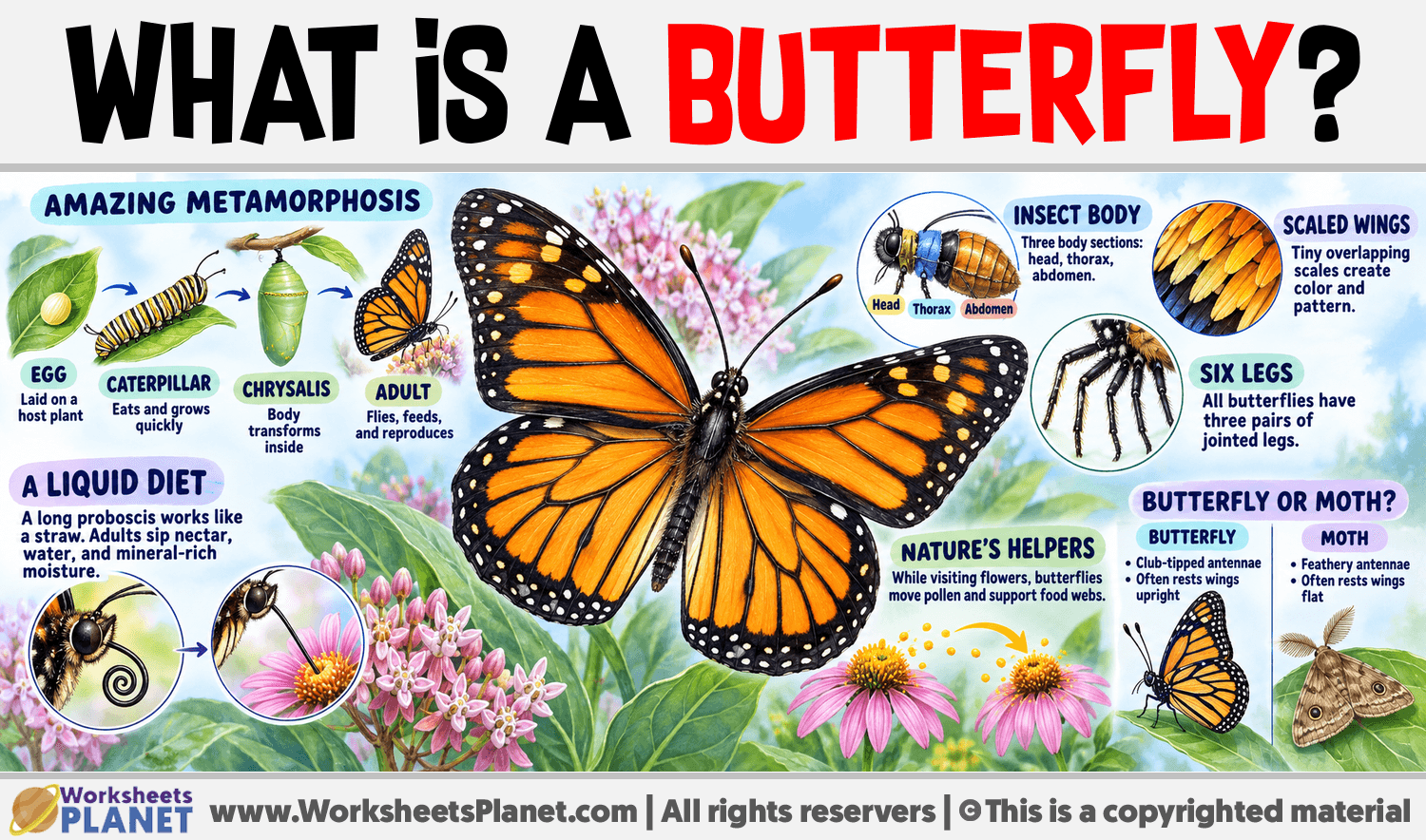
A butterfly is an insect because it has the same basic body plan as other insects. Its body is divided into the head, thorax, and abdomen. The head holds the eyes, antennae, and mouthparts. The thorax is the middle part, where the legs and wings are attached. The abdomen contains important organs for breathing, digestion, and reproduction.
Butterflies also have six jointed legs and two pairs of wings. Their wings are covered with tiny scales, which can create bright colors and patterns. These patterns are not just pretty; they can help butterflies hide from predators, warn animals that they may taste bad, or attract a mate.
- Head: contains the eyes, antennae, and feeding tube called a proboscis.
- Thorax: supports the butterfly’s wings and legs.
- Abdomen: holds many internal organs and helps with breathing and reproduction.
- Wings: have tiny scales that create colors, patterns, and camouflage.
- Antennae: help the butterfly sense smells, movement, and direction.
How does a butterfly grow and change?
One of the most important things to understand about a butterfly is its life cycle. Butterflies go through complete metamorphosis, which means their body changes completely as they grow. This is different from animals that simply get bigger while keeping the same basic shape.
The life cycle begins when an adult butterfly lays eggs, usually on a plant that the caterpillars can eat after they hatch. The caterpillar, also called a larva, spends most of its time eating leaves and growing. When it is ready, it forms a chrysalis. Inside the chrysalis, the caterpillar’s body changes into an adult butterfly. After it emerges, the butterfly waits for its wings to dry and harden before flying.
- Egg: a tiny round or oval egg is laid on a suitable plant.
- Caterpillar: the larva eats leaves and grows quickly.
- Chrysalis: the body changes inside a protective case.
- Adult butterfly: the butterfly emerges with wings and can fly, feed, and reproduce.
What do butterflies eat?
Most adult butterflies drink nectar, a sweet liquid found inside flowers. They use a long, straw-like mouthpart called a proboscis. When the butterfly is not feeding, the proboscis curls up like a spring. When it lands on a flower, it unrolls the proboscis to sip nectar.
Caterpillars eat very different food from adult butterflies. Many caterpillars eat leaves, and some are very picky about which plants they can eat. For example, monarch caterpillars feed on milkweed. This connection between caterpillars and specific plants is one reason why gardens with native plants can be important for butterfly survival.
- Adult butterflies often feed on flower nectar.
- Some butterflies also drink from wet soil, rotting fruit, tree sap, or animal droppings to get minerals.
- Caterpillars usually eat leaves, and many depend on particular host plants.
- A butterfly garden should include both nectar flowers and caterpillar food plants.
Why are butterflies important in nature?
Butterflies are important because they help with pollination. When a butterfly visits a flower to drink nectar, pollen can stick to its body and move to another flower. This helps some plants make seeds and grow new plants. Bees are usually stronger pollinators, but butterflies still play a helpful role in many habitats.
Butterflies are also part of the food chain. Birds, spiders, lizards, frogs, and other animals may eat butterfly eggs, caterpillars, chrysalises, or adults. At the same time, butterflies depend on plants for food and shelter. This means butterflies are connected to many living things in an ecosystem.
Scientists also study butterflies because they can be environmental indicators. If butterfly numbers drop in an area, it may be a sign that the habitat is changing. Problems such as pesticide use, loss of wildflowers, climate change, and habitat destruction can all affect butterfly populations.
How are butterflies different from moths?
Butterflies and moths are close relatives, but they are not exactly the same. Both belong to the order Lepidoptera, and both have scaled wings. However, there are some common differences that students can look for when comparing them.
Many butterflies are active during the day, while many moths are active at night. Butterflies usually have thin antennae with small knobs at the tips. Moths often have feathery or thread-like antennae without knobs. When resting, butterflies often hold their wings upright over their backs, while moths usually spread their wings flat or fold them like a tent.
- Butterflies: often fly during the day, have knobbed antennae, and may rest with wings held upright.
- Moths: often fly at night, may have feathery antennae, and usually rest with wings spread or folded.
- Both: are insects, have four wings covered in scales, and go through metamorphosis.
Interesting butterfly facts for students
Butterflies may look fragile, but they have many special adaptations that help them survive. Some species migrate long distances. The monarch butterfly, for example, is famous for traveling thousands of miles between North America and Mexico. Other butterflies use camouflage to look like leaves, bark, or even bird droppings.
Butterflies do not have noses like humans. Instead, they can smell with their antennae and even taste with their feet. When a female butterfly lands on a plant, she can use her feet to help decide whether it is the right place to lay eggs. This is useful because young caterpillars need the correct food as soon as they hatch.
A butterfly is more than a beautiful insect. It is a living example of growth, adaptation, and the connections between plants and animals. Learning about butterflies helps students understand life cycles, habitats, pollination, and the importance of protecting nature.
- Butterflies have compound eyes that help them notice movement and colors.
- Their wing colors may come from pigments, tiny scale structures, or both.
- Some butterflies can mimic other species to avoid being eaten.
- Planting native flowers can help support local butterfly populations.

Leave A Comment